
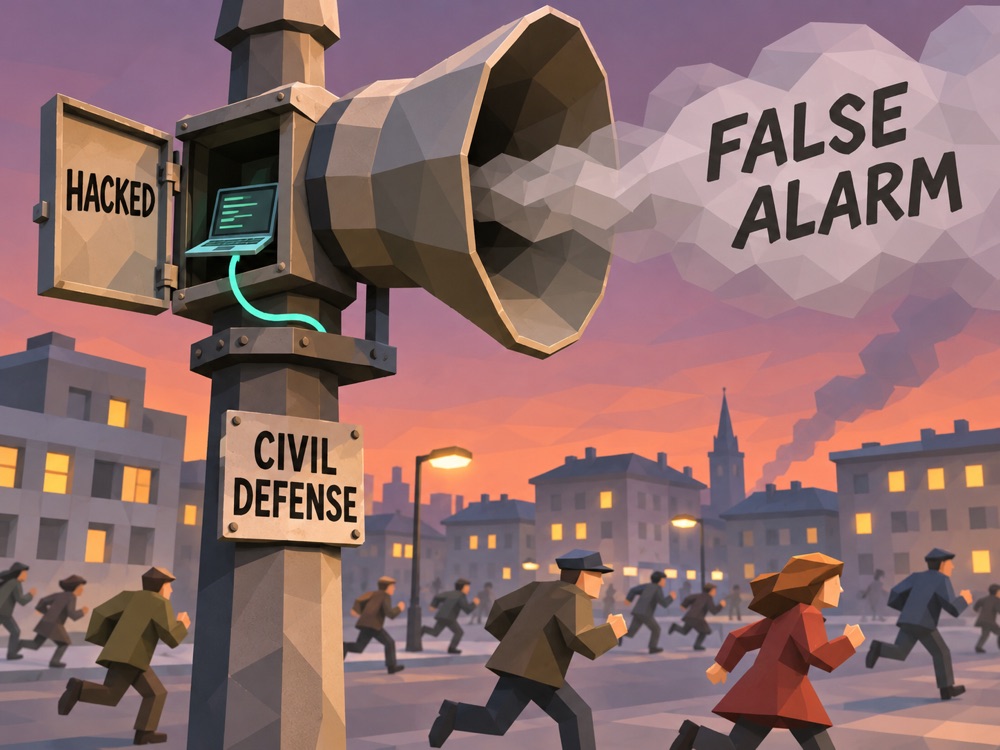
Ukraine's air raid alert system was compromised late on November 1, flooding phones with false warnings of nuclear and chemical attacks as physical sirens sounded across the country, the Air Force said.
The cyberattack sent unauthorized messages in Russian through the Air Alert app, including one stating "A nuclear alert is about to go off all across Ukraine! Don't worry, the Oreshnik is on its way." The developers disabled push notifications and suspended the application. Regional governors warned residents the threat was not real. "Currently, the situation in the oblast is calm. Reports indicate a cyberattack on the notification app," Ivano-Frankivsk Oblast Governor Svitlana Onyshchuk said.
Russia's air raid alert system was hacked in the early hours of November 2, the Russian Ministry of Civil Defense, Emergencies and Disaster Relief confirmed, in what appeared to be a Ukrainian response. Kremlin spokesperson Dmitry Peskov said government electronic resources face constant cyberattack threats. "The website of the president of the Russian Federation is subjected to cyberattacks many times a day, every day," he said during a press briefing on November 2.
The compromise occurred hours after Ukraine's military struck Russian targets deep inside the country. Ukrainian drones attacked a major Lukoil refinery in Kstovo, Nizhny Novgorod Oblast, overnight on November 1, according to video footage and Ukrainian monitoring channels. The facility is Russia's fourth-largest oil refinery and produces diesel and aviation fuel used to support Russian forces. Nizhny Novgorod Governor Gleb Nikitin said more than 100 drones were destroyed in the attack and that the "industrial enterprise" sustained significant damage, though the Kyiv Independent could not independently verify the strike.
On the same night, Russian forces struck energy infrastructure in four Ukrainian regions—Dnipro, Vinnytsia, Zhytomyr, and Khmelnytsky—leaving hundreds of thousands without power as cold weather sets in across Eastern Europe. President Volodymyr Zelenskyy said the strikes targeted substations, transformers, and power lines. Ukrainian military officials have characterized their deep strikes inside Russia as "long-range sanctions" intended to curb Moscow's war effort, as the Kremlin has shown no interest in compromising to end the war.
The simultaneous compromise of both countries' alert systems marks an escalation in the cyber dimension of the war, conducted alongside conventional strikes that show no sign of abating. Ukraine's targeting of Russian energy infrastructure has intensified throughout 2026, focusing on oil refineries and fuel depots. Russia's continued strikes on Ukrainian power systems during winter conditions raise immediate risks for civilians. The false alerts and siren activations demonstrate the vulnerability of critical infrastructure that civilians depend on for survival in a conflict zone, a vulnerability neither side has successfully hardened.
The attack on Ukraine's alert system left no physical casualties, but the compromise of a system meant to warn of real threats creates a credibility problem at a moment when false alerts could lead people to ignore genuine warnings. Both governments now face pressure to restore public confidence in systems their populations depend on to survive.