
Electronic warfare has made the Korean Peninsula one of the most "violently contested electromagnetic environments on the planet," according to the top US military commander there, forcing a wholesale shift in how American forces and their allies design weapons systems to survive without satellites, fiber optic backbones or uninterrupted communications.
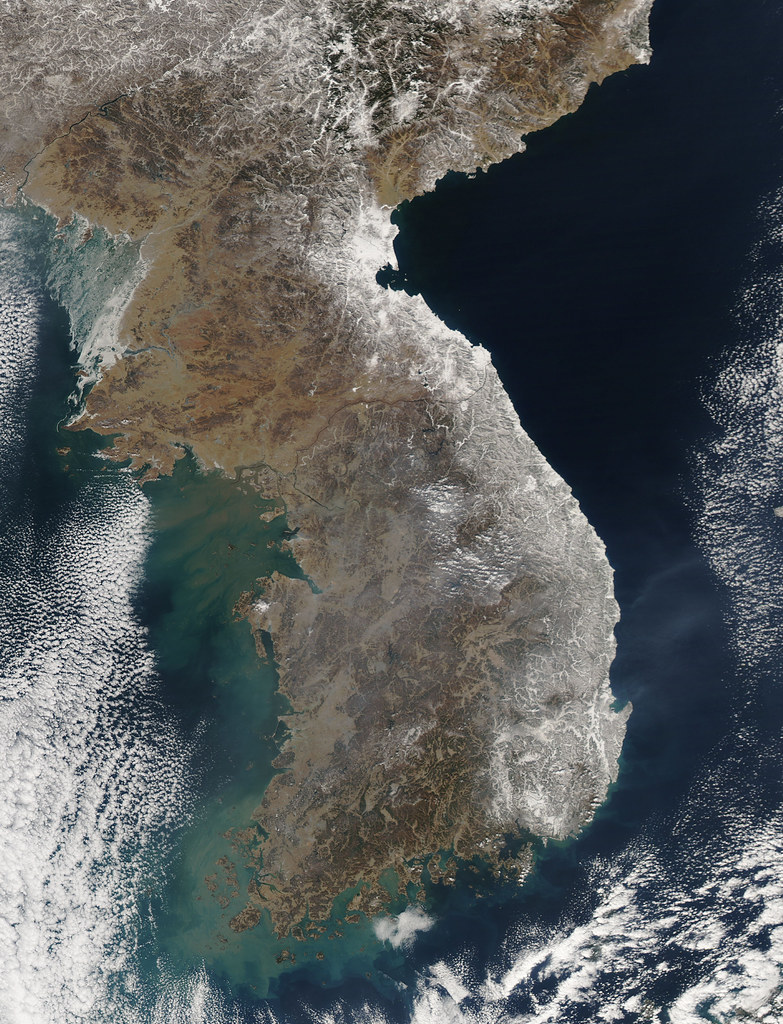
Gen. Xavier Brunson, commander of US Forces Korea and United Nations Command, delivered the assessment Tuesday at AFCEA TechNet Indo-Pacific in Honolulu to an audience of defense contractors and military officials. North Korea has long possessed electronic attack capabilities, and China maintains advanced jamming systems in the region. The Korean Peninsula has become a testing ground for conflicts waged not just with kinetic weapons but through disruption of the systems that command them.
Brunson did not name North Korea explicitly but referenced a "nuclear-armed adversary that constitutionally designates the Republic of Korea as its principal enemy" operating "across the demilitarized zone." He was direct about what that means for equipment fielded there.
"Our adversaries practice electronic attack daily. They jam GPS in the West Sea. They attempt to blind our servers, our sensors, and our networks," Brunson said. "If your capability requires pristine satellite communications, infinite bandwidth, and uninterrupted fiber optic backbone to function, it will not survive 48 hours on the peninsula."
US Forces Korea is already fielding resilient high-frequency networks alongside low-Earth orbit satellite communications and terrestrial mesh networks to maintain command and control when primary communications links are disrupted. But Brunson told the defense industry that this approach must become the standard, not the exception.
He demanded that contractors bring "lightweight, jam-resistant waveforms with low probability of intercept and low probability of detection" to the peninsula. He also asked for open-architecture software interfaces and edge sensors that can plug into joint mission networks without locking forces into a single vendor's ecosystem.
The most significant demand cut deeper into how the military and industry have worked together for decades. "We can no longer design exquisite systems for pure US enclaves and then try to bolt on partner interface after the contract is signed," Brunson said. "We must design combined from the first line of code." For over three decades, the US military built security around "hardened pipes and perimeter defenses in closed networks with stringent classification," he explained. Sharing information with allied nations meant building an entirely separate communications channel. That model fails when joint forces operate inside the same weapons engagement zone.
The shift amounts to a strategic admission: the US military can no longer assume it will have air superiority, satellite coverage, or clean communications infrastructure in a peer conflict. The Korean Peninsula is where those assumptions die first. Forces must operate as if every link can be jammed, every satellite can be denied, and every closed network can be breached. That means redesigning weapons from their foundations rather than grafting interoperability onto systems built for a unilateral US military decades ago.
It also means remaking the defense industrial base. Contractors accustomed to competing against each other on closed platforms now face pressure to build open systems that integrate with allied equipment from day one. The competitive advantage shifts from exclusive capability to resilient, redundant, interoperable design.
Brunson implored defense industry leaders to visit the peninsula and see the contested electromagnetic environment firsthand. What they will find is not a worst-case scenario for planning purposes but the live operational template that every conflict designer must now assume.